
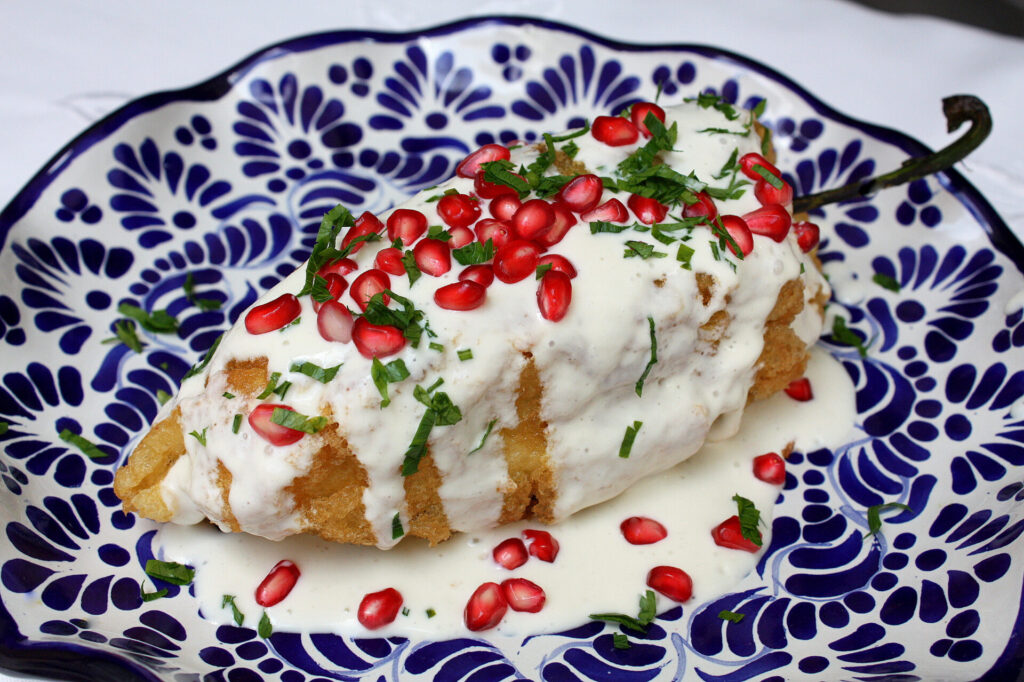
Few dishes embody the rich history and cultural pride of Mexico like Chile en Nogada. This exquisite dish, featuring a roasted poblano pepper stuffed with a savory-sweet picadillo, bathed in a creamy walnut sauce (nogada), and garnished with pomegranate seeds and parsley, is as visually stunning as it is delicious. But beyond its vibrant colors—green, white, and red, mirroring the Mexican flag—lies a deep historical and culinary significance tied to Mexico’s independence.
In this article, we’ll explore the origins, evolution, and enduring legacy of Chile en Nogada, a dish that has become a symbol of national pride and gastronomic excellence.
Origins: A Dish Fit for an Emperor
The most popular legend surrounding Chile en Nogada dates back to 1821, the year Mexico gained independence from Spain. According to tradition, Agustín de Iturbide, the leader of the Mexican independence movement and later Emperor of Mexico, was traveling through Puebla on his way to Mexico City.
To honor his arrival, the nuns of the Santa Mónica Convent in Puebla—renowned for their culinary skills—created a dish that represented the colors of the newly formed Mexican flag:
- Green from the poblano pepper
- White from the walnut sauce (nogada)
- Red from the pomegranate seeds
This patriotic presentation was not just a culinary masterpiece but also a political statement, celebrating Mexico’s newfound sovereignty.
Culinary Influences and Ingredients
Chile en Nogada is a perfect example of mestizo cuisine—a fusion of indigenous and Spanish influences:
1. The Poblano Chile
Native to Mexico, the poblano pepper was a staple in pre-Hispanic cooking. Its mild heat and thick flesh made it ideal for stuffing.
2. The Picadillo Filling
The filling reflects Spanish culinary traditions, combining:
- Ground meat (typically pork or beef)
- Fruits like apples, pears, and peaches (a Moorish influence from Spain)
- Nuts and spices (such as cinnamon and cloves)
This sweet-and-savory blend mirrors colonial-era recipes, where meat and fruit were often paired.
3. The Nogada Sauce
The creamy walnut sauce (nogada) is derived from Spanish cooking techniques, using ingredients introduced by colonial settlers:
- Walnuts (originally from Persia, brought by the Spanish)
- Milk or cream
- Cheese (such as queso fresco or panela)
4. The Garnish
The final touch—pomegranate seeds and parsley—adds texture and reinforces the patriotic color scheme.
Evolution Over Time
While the original recipe remains cherished, Chile en Nogada has evolved:
- Regional Variations: Some versions use different meats (like shredded chicken) or omit certain fruits.
- Modern Twists: Contemporary chefs experiment with ingredients like goat cheese or figs.
- Seasonal Tradition: Historically, it was prepared in August and September when pomegranates and walnuts were in season, coinciding with Mexican Independence celebrations.
Cultural Significance
Chile en Nogada is more than a dish—it’s a story of independence, cultural fusion, and culinary mastery. Whether enjoyed in a Puebla market or a high-end restaurant, each bite carries centuries of history. As Mexico continues to celebrate its heritage, this iconic dish remains a delicious reminder of the country’s vibrant past and enduring spirit. Chile en Nogada is a symbol of:
Culinary Artistry: Its complex preparation (often requiring hours of work) showcases Mexico’s rich culinary traditions.
National Pride: Its colors align with the Mexican flag, making it a staple during Independence Day festivities.
Religious Heritage: The dish’s origins with nuns highlight the role of convents in Mexican gastronomy.
Did You Know?
- Chile en Nogada is considered one of Mexico’s most labor-intensive dishes.
- UNESCO has recognized Puebla’s cuisine as an Intangible Cultural Heritage of Humanity.
Next time you try Chile en Nogada, savor not just its flavors but also the history behind every ingredient. Check out Casa Xilonen’s tours at https://casaxilonen.mx/our-tours/ to explore the history and taste the flavors of other Mexican traditional dishes ¡Buen provecho!